
Acupuncture Alongside IVF: An Overview
Updated: Sep 10
In vitro fertilization (IVF) offers hope to many couples facing fertility challenges. Yet, the journey through IVF can be physically and emotionally demanding, with success rates varying widely. Increasingly, people are turning to complementary therapies to support their fertility treatments. Among these, acupuncture has gained attention for its potential to improve IVF outcomes and overall reproductive health. This post explores how acupuncture may enhance fertility, the scientific evidence behind it, specific techniques used during IVF, and personal experiences that highlight its benefits.
.
How Acupuncture May Support Fertility and IVF
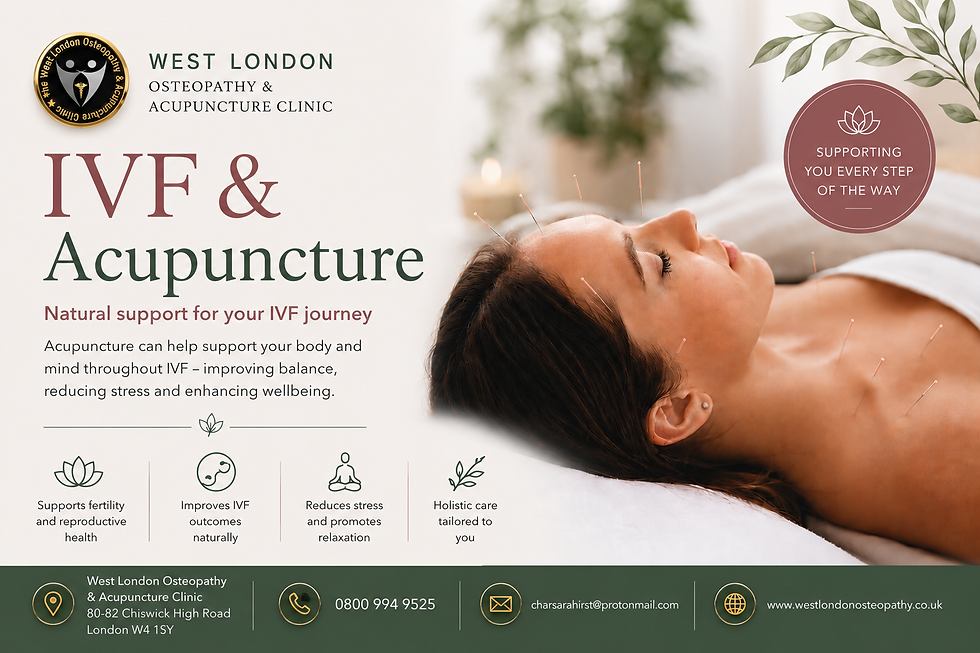
Acupuncture is a traditional Chinese medicine practice that involves inserting thin needles into specific points on the body. It aims to balance the body's energy flow, or "Qi," and improve overall health. When it comes to fertility, acupuncture is believed to:
Improve blood flow to the uterus and ovaries, which may enhance the uterine lining and egg quality.
Regulate hormonal balance by influencing the endocrine system.
Reduce stress and anxiety, which can negatively impact fertility.
Support immune function, potentially reducing inflammation that might interfere with implantation.
These effects could create a more favorable environment for conception and embryo implantation during IVF.
Scientific Studies on Acupuncture and IVF Success
Research on acupuncture’s effectiveness in IVF has produced mixed but promising results. Several studies suggest acupuncture may improve pregnancy rates, while others call for more rigorous trials.
A 2002 study published in Fertility and Sterility found that women who received acupuncture before and after embryo transfer had significantly higher pregnancy rates compared to those who did not receive acupuncture.
A 2018 review in Reproductive Biomedicine Online analyzed multiple clinical trials and concluded that acupuncture might improve clinical pregnancy rates, especially when combined with IVF.
Some studies highlight acupuncture’s role in reducing IVF-related stress and improving patient well-being, which can indirectly support treatment success.
Experts emphasize that acupuncture should complement, not replace, conventional fertility treatments. The variability in study outcomes may relate to differences in acupuncture protocols, patient populations, and timing of treatments.
Specific Acupuncture Techniques Used in IVF
Acupuncturists tailor treatments to each individual, but certain techniques are commonly used to support IVF:
Pre-IVF stimulation phase: Acupuncture sessions focus on improving ovarian function and blood flow. Points around the lower abdomen, legs, and back are targeted.
Day of embryo transfer: A session is often scheduled before and after the transfer to reduce uterine contractions and promote relaxation.
Post-transfer support: Treatments aim to maintain uterine lining health and reduce stress during the two-week wait before pregnancy testing.
Common acupuncture points used include:
SP6 (Sanyinjiao): Located on the inner leg, it is believed to regulate reproductive organs.
CV4 (Guanyuan): On the lower abdomen, associated with nourishing the uterus.
LI4 (Hegu): On the hand, used to relieve stress and pain.
ST36 (Zusanli): On the leg, supports overall energy and immune function.
In addition to needles, some practitioners use moxibustion (heat therapy) or electro-acupuncture to enhance effects.
Personal Stories of Acupuncture Supporting IVF
Many individuals share positive experiences with acupuncture during their IVF journey. Here are a few anonymized examples:
Emily, 34, had two unsuccessful IVF cycles before trying acupuncture. She credits acupuncture with helping her relax and improving her cycle regularity. After six sessions, she conceived on her third IVF attempt.
James and Sarah found acupuncture helped reduce Sarah’s anxiety during IVF. Sarah describes feeling more balanced and hopeful, which made the process easier to handle emotionally.
Maya experienced painful ovarian stimulation but noticed less discomfort and better sleep after acupuncture treatments, which she believes contributed to a successful embryo transfer.
While these stories are personal and not universal, they highlight how acupuncture can provide physical and emotional support during fertility treatments.
What to Expect When Combining Acupuncture with IVF
If you consider acupuncture alongside IVF, here are some practical tips:
Find a licensed acupuncturist experienced in fertility care. They will understand the timing and techniques best suited for IVF.
Start acupuncture early in your IVF cycle. Some recommend beginning treatments weeks before stimulation to prepare the body.
Communicate with your fertility clinic. Ensure your medical team knows about your acupuncture treatments.
Be consistent but flexible. Treatment frequency varies; some patients have weekly sessions, others more often around key IVF dates.
Monitor your response. Keep track of any changes in symptoms, stress levels, or side effects.
Acupuncture is generally safe when performed by trained professionals. Still, discuss any concerns with your healthcare providers.


Comments